The Story of Kerala Written on Water
For centuries, Kerala’s relationship with water has been much more than scenic.
Its rivers, lakes, canals, lagoons and backwaters shaped how communities travelled, traded, farmed, celebrated and connected with one another. Before modern roads and motorised transport transformed the landscape, boats were essential to everyday life.
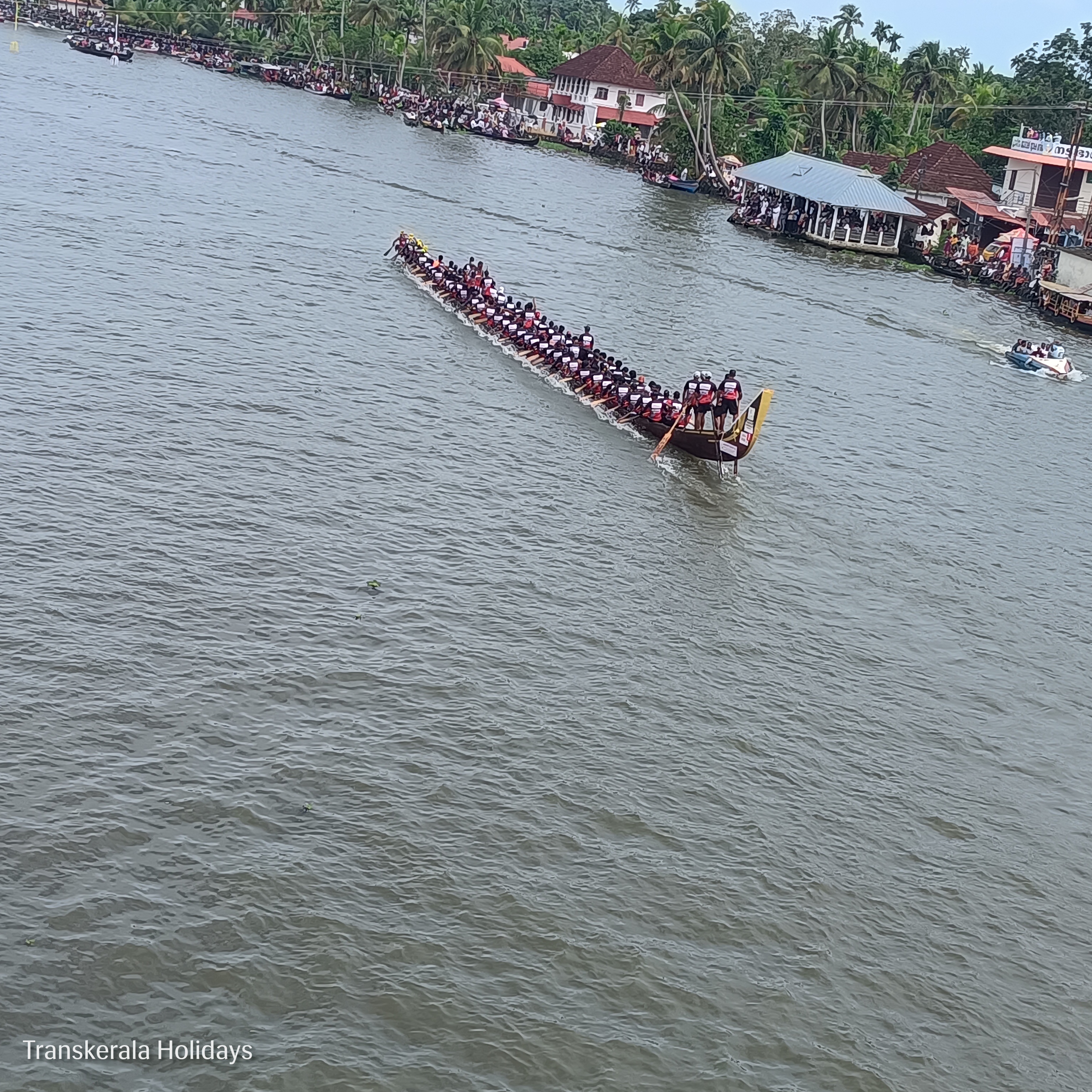
Among Kerala’s most extraordinary traditional vessels are the magnificent Chundan Vallams, popularly known around the world as Kerala’s “snake boats”.
Today, these long wooden boats are famous for the spectacular Vallam Kali, or boat races. But their story reaches far beyond sport.
What Is a Chundan Vallam?
A Chundan Vallam is a long, narrow traditional racing boat distinguished by its dramatically raised prow and stern.
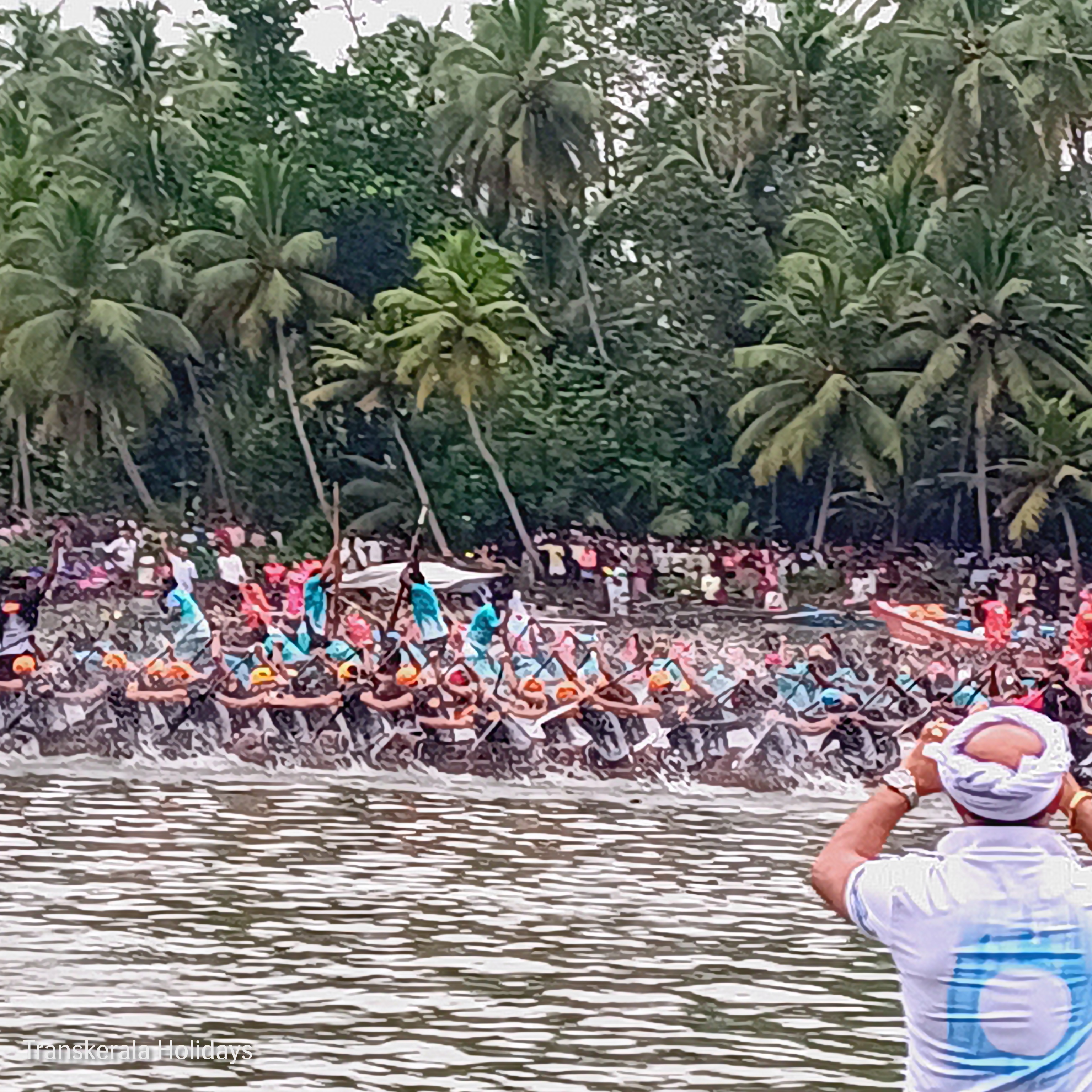
Some modern racing Chundans stretch beyond 100 feet and can carry around 100–150 rowers. During a race, the rowers move together to the rhythm of traditional boat songs and drums, creating an extraordinary display of coordination and collective strength.
The English expression “snake boat” is associated with the boat’s long, sinuous appearance. The Malayalam word Vallam simply means boat.
For an international visitor, however, the most important thing to understand is this:
A Chundan Vallam is not merely a racing boat. It is a living piece of Kerala’s heritage.
Boats That Once Served a Practical Purpose
Kerala’s traditional boats developed because life in the region demanded efficient movement across water.
Boats were used for transportation, fishing, carrying goods and connecting communities separated by waterways. Larger vessels also had military associations. Kerala Tourism notes that Chundan Vallams continued to play an important role after periods of warfare and later became associated with boat races.
In a landscape where water was often the easiest route between settlements, boat-building became an important traditional skill.
The boat was therefore not simply a means of transport.
It was part of the economy, geography and social life of Kerala.
From Working Vessel to Cultural Icon
Over time, many traditional boats moved from everyday practical use into ceremonial and sporting traditions.
The transformation is particularly visible in Vallam Kali, Kerala’s celebrated boat-racing tradition.
Village communities come together to prepare boats, train rowers, organise supporters and preserve songs and rituals. A racing boat often represents more than a team: it represents a village, its identity and its collective pride.
That is why a boat race in Kerala can feel less like a conventional sporting event and more like an entire community coming alive.
More Than One Traditional Boat
Although Chundan Vallams are the most famous, Kerala’s traditional boat culture includes several other forms.
Depending on the region and event, visitors may encounter:
- Chundan Vallam – the iconic long “snake boat”
- Palliyodam – the distinctive ceremonial boats of Aranmula
- Churulan Vallam – a smaller, curved traditional racing boat
- Iruttukuthy Vallam – another important racing category
- Veppu Vallam – traditionally associated with boat-race traditions
- Odi Vallam
- Vadakkanody Vallam
- Kochu Vallam
These boats demonstrate how Kerala’s waterways produced different designs for different purposes.
Why Were Boats So Important to Kerala?
The answer lies in Kerala’s geography.
The backwaters and waterways were natural highways long before modern highways existed.
Boats enabled people to:
Travel → Trade → Fish → Farm → Communicate → Celebrate → Defend communities
This deep relationship with water helps explain why boats continue to occupy such an important place in Kerala’s cultural imagination.
Vallam Kali Today
Modern boat races preserve many elements of the older tradition while transforming them into major sporting and cultural spectacles.
The Nehru Trophy Boat Race, held on Punnamada Lake in Alappuzha, is one of the best-known examples.
Its modern history began in 1952 when India’s first Prime Minister, Jawaharlal Nehru, visited the region. A boat race was organised during the celebrations, and Nehru was so impressed by the experience that he donated a trophy. The event subsequently became known as the Nehru Trophy Boat Race.
Importantly, the Nehru Trophy is a modern sporting event rather than an ancient ritual. This distinction makes Kerala’s story even more interesting: ancient waterways and traditional boat-building evolved into a modern celebration of community and sport.
Why Snake Boats Still Matter
In an increasingly modern world, Kerala’s snake boats represent something timeless.
They demonstrate:
- The importance of community over individual achievement
- The value of traditional craftsmanship
- Kerala’s historic relationship with its waterways
- The preservation of local songs and customs
- The importance of cultural identity
- The potential of sustainable, human-powered traditions
When 100 or more rowers move together, no individual can succeed alone.
That is perhaps the most powerful message of Vallam Kali.
One boat. One rhythm. One community.
Experience Kerala Beyond the Postcard
For international travellers, watching a Kerala boat race can offer much more than a spectacular photograph.
It is an opportunity to understand how geography shaped Kerala’s history, how traditional skills survived into the modern age and how communities continue to celebrate their shared identity.
The next time you see a Chundan Vallam racing across Kerala’s backwaters, remember that you are not simply watching a boat.
You are watching history move across the water.
#Kerala #SnakeBoat #ChundanVallam #VallamKali #KeralaBoatRace #Alappuzha #KeralaBackwaters #KeralaCulture #KeralaHeritage #IncredibleKerala #ResponsibleTourism #TransKeralaThe Story of Kerala Written on Water


 TransKerala